Creative is the new targeting.
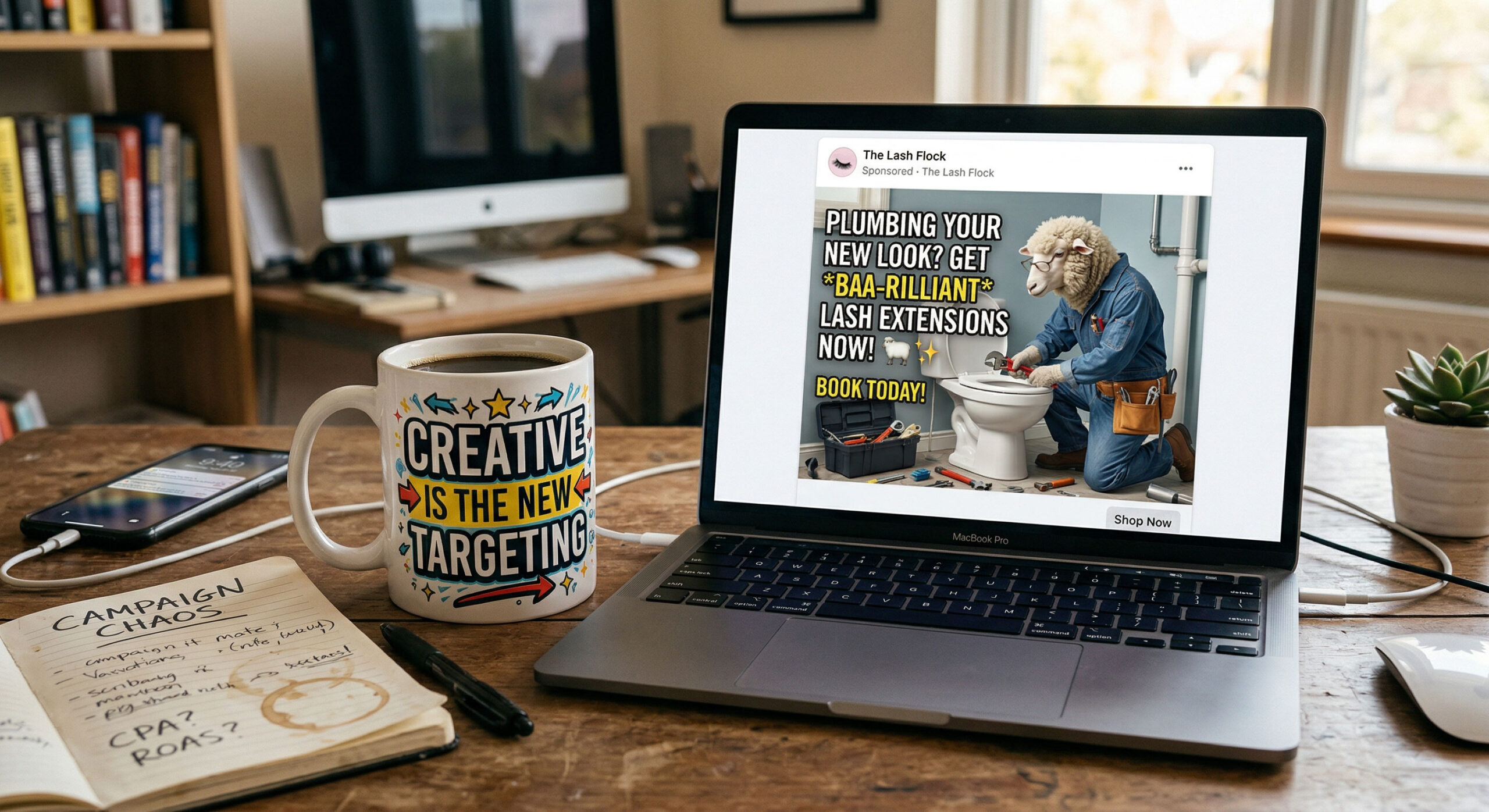
If you’ve spent any time in paid social over the last year, you’ve probably heard that phrase more times than you can count, maybe you’ve even got the printed mug. The sceptic in me wonders if that has something to do with the level of investment from mega corporations, because I remember pretty good results long before Gen AI really ramped up.
It makes sense on the surface. Platforms like Meta have stripped back a lot of the manual levers we used to rely on. Detailed interests options are dwindling and treated as only suggestions. Lookalikes aren’t the silver bullet they once were. Campaigns are broader, more automated, and increasingly driven by machine learning.
So naturally the conclusion is: If we can’t control who sees our ads as much anymore then it must be the creative doing all the heavy lifting. But that’s only part of the story.
There’s no denying things have shifted. We’ve gone from tightly defined audiences and layered targeting to broader setups relying on the algorithm black box. Meta’s Advantage+ push and its ongoing investment in AI means the platform is now doing far more of the decision-making (as well as hiding all the buttons to turn off these AI “enhancements”).
Instead of telling the platform exactly who to target, we’re now giving it “signals” and letting it figure things out.
We’ve gone from: “Show this ad to these people” to “Find me more people who will convert”. Which leaves creative as one of the clearest observable signals the algorithm can learn from.
The most pushed conclusion I see is simply: Targeting doesn’t matter anymore and creative is key. We know that there isn’t always a nice clean takeaway in marketing (brand vs performance, attribution, which platform is best etc. etc.)
The reality is targeting hasn’t disappeared overnight, it’s just moved. The algorithm is still deciding who sees your ads. It’s still optimising towards certain users, behaviours and signals. You just have less direct control over it.
Here’s the part that I haven’t seen much conversation on. Creative hasn’t suddenly become important, it has always been critical.
Even when we had more control over audiences, you could target the “perfect” user on paper and still get nowhere if the ad didn’t land. If the creative was irrelevant, uninteresting, or just didn’t resonate, then your results reflected that.
Targeting got your ad in front of people but it is the creative that captured attention in busy feeds and decided what happened next.
That hasn’t changed.
So what has changed?
The main difference now vs a couple of years ago is that creative isn’t just influencing performance anymore it now influences delivery. So every interaction with your ad: views, clicks, shares, conversions, it all feeds back into the algorithm and is used to determine who sees your ads next.
Creative isn’t replacing targeting. It’s becoming the input that powers it. The better your creative performs, the clearer the signal and the better the platform gets at finding the right audience.
Part of the reason this feels like such a dramatic change is visibility. Before, if performance dropped, it was easy to blame targeting
- Audience too small
- Wrong interests
- Lookalike not working
With broader AI driven setups, those reasons may be valid, but are a lot harder to justify. Now when things don’t work, it’s usually down to:
- The message
- The format
- The hook
Which makes creative feel like the new lever but in reality, these were all things we were testing long before this “change”.
What This Means in Practice
This shift does change how you approach campaigns, even if the fundamentals aren’t new.
Creative volume matters more
-
- One ad isn’t enough (even if Meta is still going to put all the spend behind one most days). More variations (and we mean actual variations, not just a different colour background or a slight change in wording) means more signals and more opportunities for the algorithm to learn.
Relevance beats polish
-
-
- 59% [1] of people think there is too much brand advertising generally so the best-performing ads often don’t look like ads. They look like content that belongs in the feed.
- If it doesn’t feel native, it probably won’t work.
-
Creative testing becomes your targeting strategy
-
-
- Instead of obsessing over audience tweaks, you’re learning which hooks, formats, and messaging resonates and scaling that.
-
Broader is (usually) better (This one took a while to accept!)
-
- Over-segmentation can limit learning. So strong creative combined with broad audiences often outperform tightly controlled setups.
Just because “creative is the new targeting.” is the new(ish) phrase that is being pushed. We need to be mindful that we don’t interpret that as “Targeting doesn’t matter anymore”. Knowing your audience and who you are targeting along with conversion tracking, data quality, account structure & clear signals still matter. A lot.
You’ve lost some levers. You haven’t lost responsibility.
So is creative really the new targeting? Not really.
Creative has always been the thing that gets people to stop scrolling, builds relevance and drives action. What’s changed is that it now plays a bigger role in who your ads reach as well.
The best campaigns haven’t fundamentally changed. Strong messaging, relevant content, and understanding your audience still win.
The difference now is that instead of telling platforms exactly who that audience is you’re showing them and it’s your creative doing the talking.
Sources:
[1] https://www.hootsuite.com/research/consumer-report